Walk into a modern medical centre, a shared retail space, or a community hub and you’ll notice something straight away: the old idea of “one business, one counter, one EFTPOS terminal” no longer fits.
Today, multiple independent businesses often operate from the same physical space. They share rooms, reception areas, and sometimes even staff. What they shouldn’t have to share is messy payments, unclear reporting, or money landing in the wrong account.
That’s the problem Multi-Merchant on Feitian, powered by EFTPOS One, was built to solve.
The real-world problem
Traditionally, collaborative spaces have had two poor options when it comes to payments. Either every business installs their own EFTPOS terminal - creating clutter, higher costs, and unnecessary duplication - or one terminal is shared informally, with settlements and reporting becoming a nightmare.
Neither option works particularly well, especially once compliance, accounting, and transparency come into play.
One terminal, multiple independent businesses
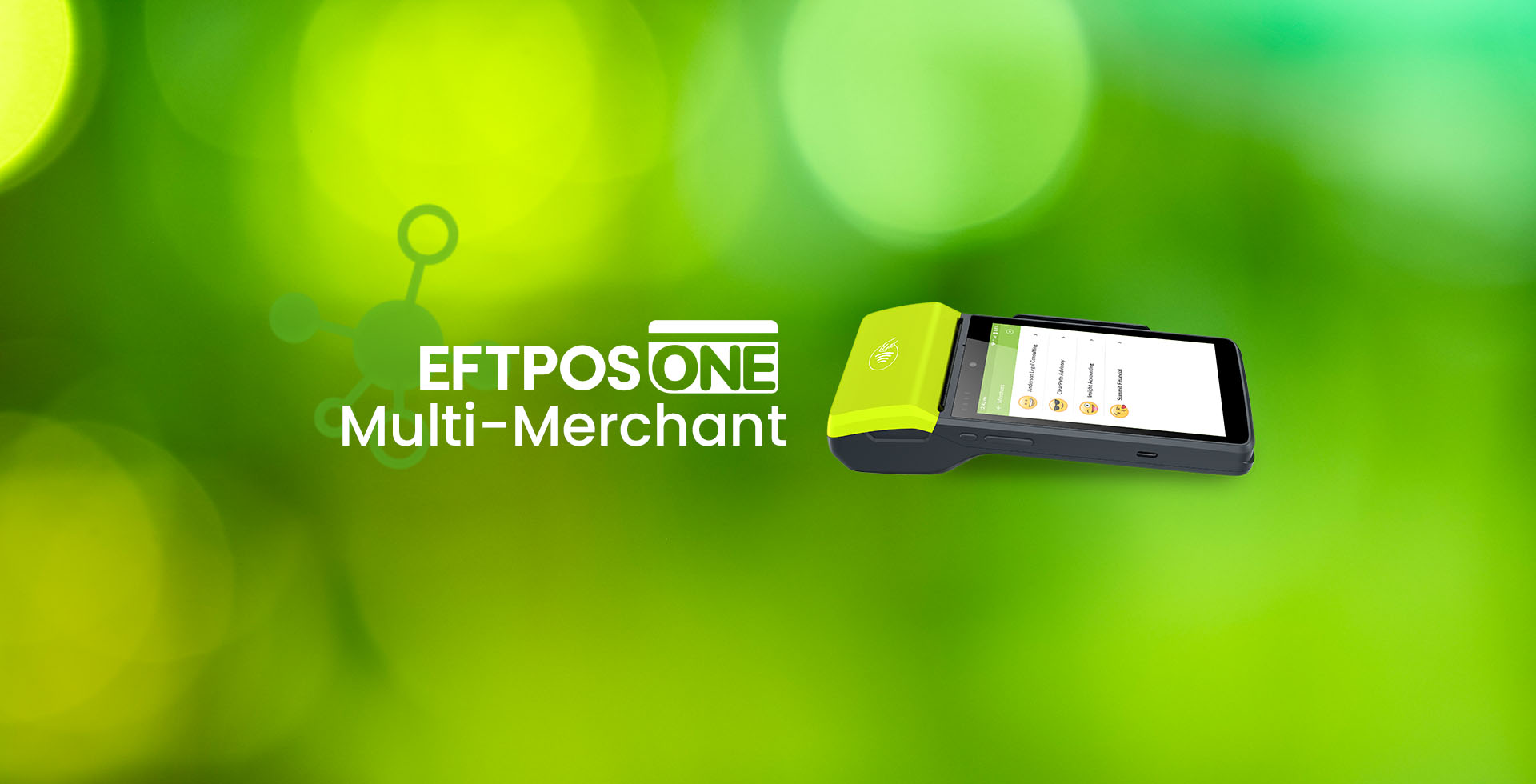
At first glance, Multi-Merchant looks simple: one EFTPOS terminal on the counter. But behind that screen, the terminal is capable of operating up to eight completely separate merchants, all from the same device.
When it’s time to take a payment, the process is effortless. The merchant is selected directly on the screen, the transaction is processed, and everything else happens exactly as it should in the background.
Each business settles to its own bank account, receives its own reports, and maintains its own merchant facility. From an operational and compliance perspective, each merchant is treated as a standalone business - without needing a standalone terminal.
Designed for shared environments
This is where Multi-Merchant really shines.
In collaborative spaces, costs matter just as much as clarity. By sharing a single terminal, businesses can split the cost of EFTPOS hardware and connectivity while still retaining full independence over their payments. It’s a rare case where sharing infrastructure doesn’t mean giving up control.
It also means fewer devices, fewer cables, and a cleaner counter - something reception staff and customers alike tend to appreciate.
Payments that fit each business, not the other way around
Not every business in a shared space accepts payments the same way. One might rely heavily on EFTPOS and debit cards, while another prefers mobile wallets or alternative payment methods.
With Multi-Merchant, each business chooses which payment types they want to accept. EFTPOS, Visa, AMEX, Mastercard, Apple Pay, Google Pay, PayPlus, Centrapay, MTA, GiftCards - it’s not a one-size-fits-all approach. Each merchant configures what makes sense for them, without affecting anyone else using the terminal.
Simple for staff, seamless for customers
Despite the sophistication behind the scenes, Multi-Merchant is intentionally simple at the point of sale. Switching between merchants is as easy as tapping a name on the screen. There’s no logging in and out, no swapping terminals, and no awkward explanations to customers.
From the customer’s perspective, the payment experience feels exactly as it should - fast, familiar, and frictionless.
Built for how businesses actually operate today
It’s not a workaround or a compromise. It’s a deliberate response to the way businesses are evolving - towards shared spaces, collaborative models, and smarter use of technology.
Because in today’s world, sometimes one EFTPOS terminal needs to be more than just one business; Multi-Merchant on EFTPOS One is the answer to that.